Weight loss 6 min read
Indian Diet for Weight Loss: What to Eat, With Real Numbers
By the Amelior Labs team · October 5, 2026
What to eat to lose weight on an Indian diet is one of the most searched food questions, and most answers list foods to avoid. A more useful approach is to know what your usual dishes contain. This guide uses Thali's database to show per-katori and per-piece calories for everyday dishes, so you can compare options you already like. It does not set a calorie target, because that is personal, and real portions vary with the cook and the bowl.
What the NHS says about losing weight
The NHS suggests aiming to lose about 0.5 to 1 kg (1 to 2 pounds) a week, and its tips include getting 150 minutes of activity a week, aiming for 5 A Day, swapping sugary drinks for water and not skipping meals, since you may end up snacking more. It also advises against losing weight suddenly with diets. None of this requires giving up Indian food. It does require knowing roughly what you are eating, which is where a database and a log help. We do not give calorie targets because they depend on the person. Small, steady changes are also easier to keep up than a dramatic overhaul.
Lighter everyday dishes, per katori
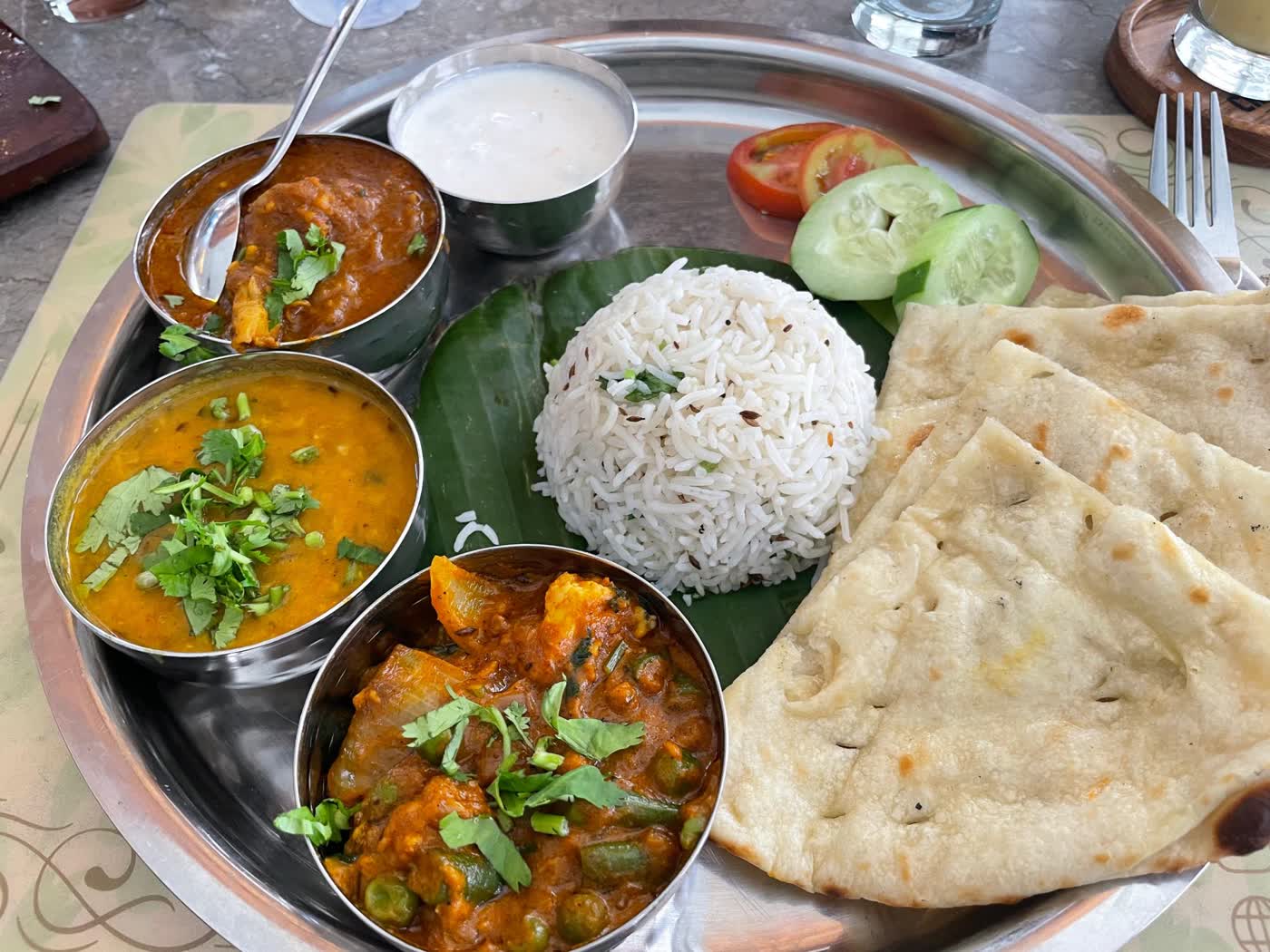
Vegetable sabzi, sambar and sprouts carry fewer calories per portion than rich gravies, and they bring fibre as well. The values below use a 150 g katori unless stated, from Thali's database. Dals such as toor are not the lowest in calories but they add protein and keep you satisfied for the amount. Choose the entry that matches how you cook, since added oil changes it. Cooking method matters as well: a sabzi finished with a spoon of oil is a different entry from one made with ghee and cream. If you are unsure, log the nearest entry and make a note to adjust it next time.
- Sambar: about 83 kcal
- Lauki sabzi: about 83 kcal
- Baingan bharta: about 108 kcal
- Saag: about 117 kcal
- Toor dal: about 147 kcal, 9 g protein
- Sprouted moong salad, 1 bowl (204 g): about 77 kcal
Where the calories hide in curries
Ghee, butter, cream and fried onion are the usual reasons two versions of one dish differ. One teaspoon of ghee (4 g) is about 36 kcal in the database, which is small once but easy to repeat. At the same 150 g portion, paneer butter masala is about 246 kcal, mutter paneer about 248 kcal and palak paneer about 165 kcal. For dal, plain toor is about 147 kcal, tadka about 143 kcal and dal makhani about 222 kcal. Choosing the lighter version of a dish you like is often easier than giving it up. At restaurants, ask for the sauce on the side if you want to control how much you take.
Snacks and drinks add up quietly
Between meals, small items can add as much as a full bowl of dal. The database lists a fried medium samosa (65 g) at about 209 kcal and a baked one at about 170 kcal. It lists pakora (60 g) at about 189 kcal and jalebi (50 g) at about 173 kcal. Drinks matter too: a 150 ml masala chai is about 68 kcal, a 250 ml chaas about 88 kcal, a 200 ml sweet lassi about 180 kcal and a 250 ml plain lassi about 155 kcal. The NHS tip to swap sugary drinks for water is a simple place to start.
Roti and rice in portions
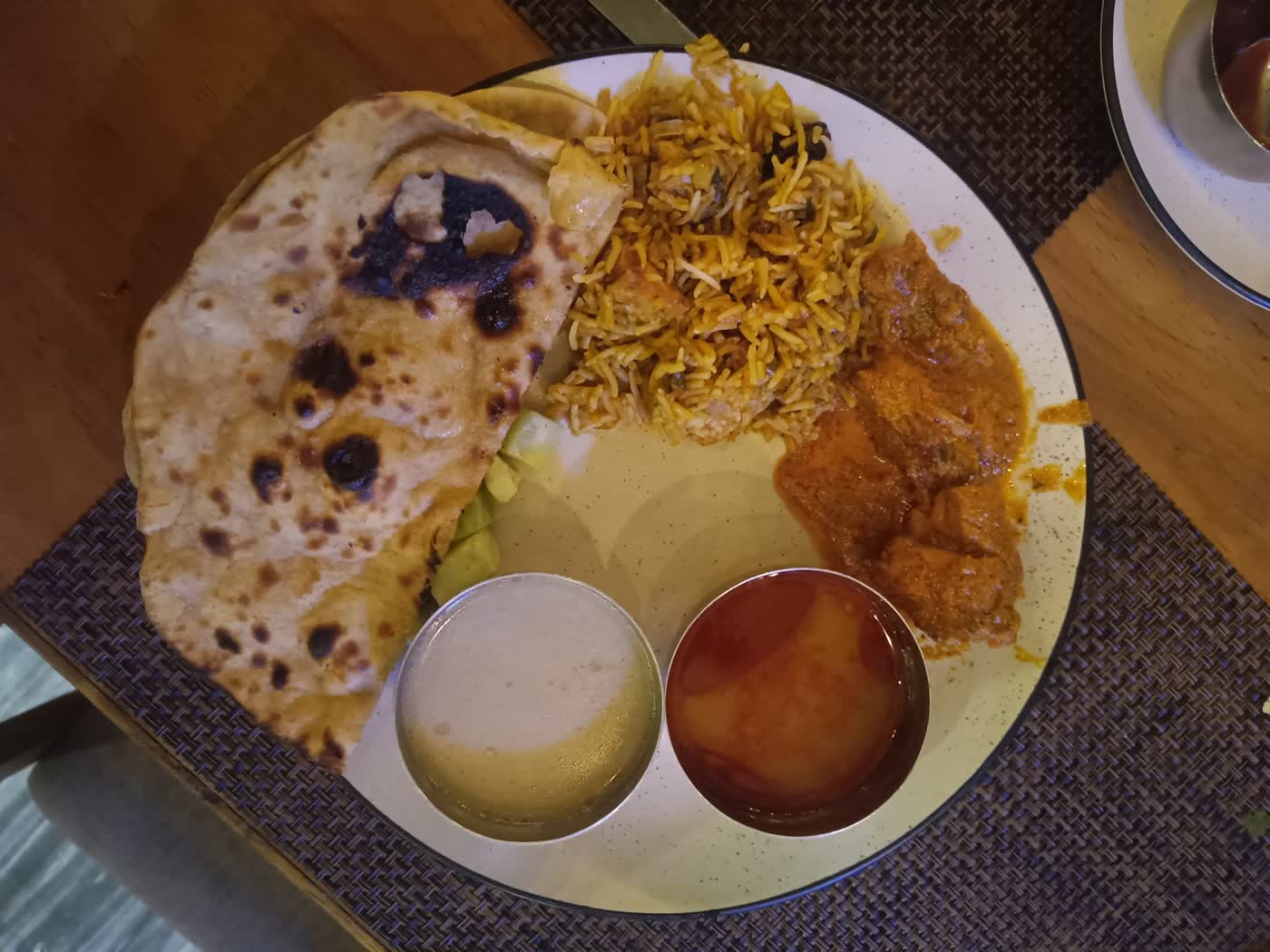
Roti and rice can stay on your plate once you count them. In the database, two phulkas (60 g) are about 158 kcal, and one 150 g katori of plain white rice is about 195 kcal. A rich meal with a naan or a buttered paratha will look very different from one with phulkas, even if the curry is the same. Our roti versus rice guide shows more breads side by side. Whatever you pick, log the number you actually ate rather than the number you meant to eat. Count the sides you add, such as raita and pickle, because they add small amounts too. Raita is about 72 kcal per katori, and mango pickle (1 tbsp, 15 g) is about 14 kcal.
Tracking Indian meals realistically with Thali
Tracking works when it is quick enough to do every day. Thali lets you log by katori, piece or cup, scan a photo so AI identifies the meal, or log by voice. When a dish is matched, the calories come from its verified database of South Asian dishes rather than from AI. If you are aiming for a certain pace of change, check it with a doctor or registered dietitian who knows your health. Thali is available on Android now, and iOS is awaiting approval. Review the week rather than a single day, and look for the entries that repeat. One high day tells you little.
Frequently asked questions
What to eat to lose weight on an Indian diet?
No single food does it. Compare options you already eat: in Thali's database a katori of sambar is about 83 kcal, lauki sabzi about 83 kcal and toor dal about 147 kcal, while paneer butter masala is about 246 kcal. The NHS advises gradual change and not skipping meals.
How fast can I lose weight?
The NHS suggests aiming for about 0.5 to 1 kg (1 to 2 pounds) a week and advises against sudden diets. Your own pace should be agreed with a doctor or registered dietitian, especially if you have a health condition.
Is roti bad for weight loss?
No food is bad on its own. In Thali's database a 30 g phulka is about 79 kcal and a 45 g chapati about 134 kcal. The total depends on how many you eat, their size, the fat used and what you serve with them.
Which Indian foods are high in calories?
Rich gravies and fried or sweet items stand out. At 150 g, paneer butter masala is about 246 kcal and dal makhani about 222 kcal, and a fried samosa (65 g) is about 209 kcal. Portion size matters as much as the dish.
Can an app help me count Indian food calories?
Yes, if its database covers your dishes. Thali logs in katori, roti and cup portions, offers AI photo scanning and voice logging, and takes calories only from its own verified database. It is available on Android now, and iOS is awaiting approval.